Meet the Faculty: Kelly Ann Fitzpatrick Connects Computing, Communication and Industry Experience
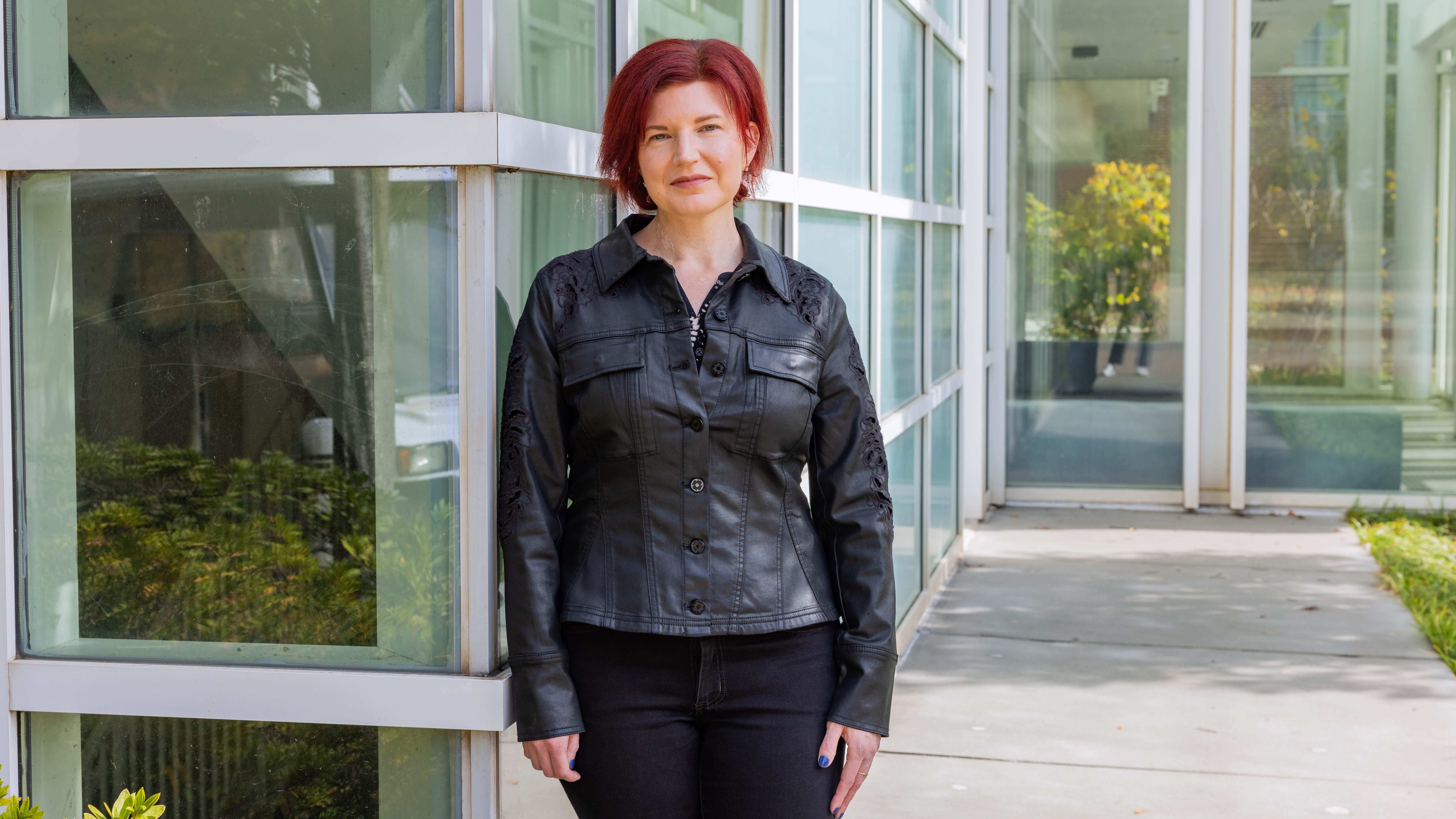
Kelly Ann Fitzpatrick's career has spanned medieval literature, software testing, and industry research, experiences that eventually led her to teaching at Georgia Tech's School of Computing Instruction (SCI). Along the way, she has become interested in how people shape ideas, share knowledge, and use technology to solve problems.
As a faculty member in SCI, Fitzpatrick draws on this experience to teach technical communication, a course that helps computing students develop the skills needed to explain their work, collaborate, and navigate their future careers.
She sees her role as a way to bring together three things that matter to her: science, education, and people.
An Unconventional Path to Computing Education
Fitzpatrick's academic background is in English studies. As an undergraduate at the University of Notre Dame, she focused on medieval literature and took on contract work as an editor and technical writer. That work led her into the tech industry, where she became a quality assurance analyst at a startup. She also learned to code and later led the company's Test and Release team.
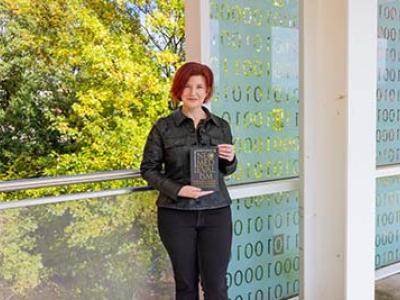
She first came to Georgia Tech as a Brittain Postdoctoral Fellow with the Writing and Communication Program, where she began teaching technical communication in 2016. The fellowship gave her the opportunity to write Neomedievalism, Popular Culture, and the Academy: From Tolkien to Game of Thrones, a book exploring the intersection of medieval studies and popular culture, published in 2019.
After her fellowship, she returned to industry as an analyst at RedMonk, a developer-focused research firm. Over six years, she studied technology trends, advised organizations, and created content through conference presentations, blog posts, videos, and podcasts.
“My favorite part of the job was the conversations that I had with tech industry practitioners ranging from CEOs to early career developers. I love to hear what people are building, why, for whom, and what they are building with,” she said.
Even while working in industry, Fitzpatrick maintained a connection to Georgia Tech. From 2022 through July 2026, she worked as a part-time researcher for the College of Computing while continuing her work in industry. Having moved among teaching, industry, and consulting throughout her career, she felt ready to return to the classroom full time.
“For a long time now, I have managed to keep one foot in academia and the other in the tech industry. The time felt right to return to teaching full time,” she said.
Preparing Students to Communicate Their Work
Fitzpatrick now teaches technical communication, a 3000-level course designed for computing majors. Students develop professional and technical communication skills while exploring design, usability, project and product management, and presentations.
The course has evolved since Fitzpatrick first taught its predecessor, which was part of Georgia Tech's School of Literature, Media, and Communication (LMC).
She is adapting the course to an evolving technology landscape. For example, generative AI has introduced new questions for both writing and computing education.
“Part of the challenge in teaching technical communication to computing majors is helping them navigate the overwhelming number of tools available to them and finding a way to judge when not to use AI,” she said.
Making Technical Brilliance Heard
Fitzpatrick believes communication skills are increasingly important for computing graduates entering a competitive job market. Students must be able to demonstrate their work, explain their decisions, and respond to questions. In the workplace, those same skills help professionals collaborate, advocate for their teams, and advance their careers.
Her research reflects some of these changing expectations. This past summer, she co-led a 14-member working group through the 2026 ACM Conference on Innovation and Technology in Computer Science Education (ITiCSE), examining the role of generative AI in computing capstone courses. The group is currently revising its report for anticipated publication in early 2027.
Ultimately, Fitzpatrick wants students to recognize that their technical knowledge is only part of what they bring to the profession.
"It is not enough for our students to be technically brilliant, which they are," she said.
"I want Georgia Tech's computing graduates to go out into the world knowing that they can meet these nontechnical challenges and find ways to make sure that their brilliance is seen and heard."